OptiTrack
OptiTrack is the world leader in 3D motion capture and tracking technology. Our cameras and software deliver sub-millimetre precision, ultra-low latency, and real-time performance trusted by innovators across industries.
What we achieved together
90%
Engineering hours
6+
CMS platforms delivered
5
Enviroments
About the project
OptiTrack is the world leader in 3D motion capture and tracking technology. Our cameras and software deliver sub-millimetre precision, ultra-low latency, and real-time performance trusted by innovators across industries.
With on-site design and manufacturing in Oregon, we combine world-class hardware and software engineering with unmatched affordability. By uniting precision engineering, scalable solutions, and collaborative partnerships, OptiTrack continues to set the standard for what’s possible in motion tracking.OptiTrack needed to modernise a complex website under real operational pressure: leadership wanted visible progress quickly, but the business couldn’t afford downtime or another expensive rebuild that became difficult to maintain.
The project had three core constraints:
Prove progress early with a real production release
Integrate a complex stack without breaking critical fows
Keep internal ownership, not an “agency-only” platform
The challenge
OptiTrack needed to modernise a complex website under real operational pressure: leadership wanted visible progress quickly, but the business couldn’t afford downtime or another expensive rebuild that became difficult to maintain.
The project had three core constraints:
Prove progress early with a real production release
Integrate a complex stack without breaking critical fows
Keep internal ownership, not an “agency-only” platform
A rollout strategy
Instead of treating the rebuild as a single launch event, we approached it gradually.
We needed to show progress early, keep revenue safe, and steadily move onto the new stack.
Phase 1: Homepage
We shipped a new homepage early to prove momentum in production. It set the new navigation, layout system, and the foundation for everything that followed.
Phase 2: Content rollout
Next, we moved the “safe surface area” first:
static pages → news → downloads + solution content
This gave marketing real publishing velocity while engineering continued building the complex commerce layer in parallel.
Phase 3: Products + commerce
We didn’t release product pages as “content-only.” For OptiTrack, product pages are commerce.
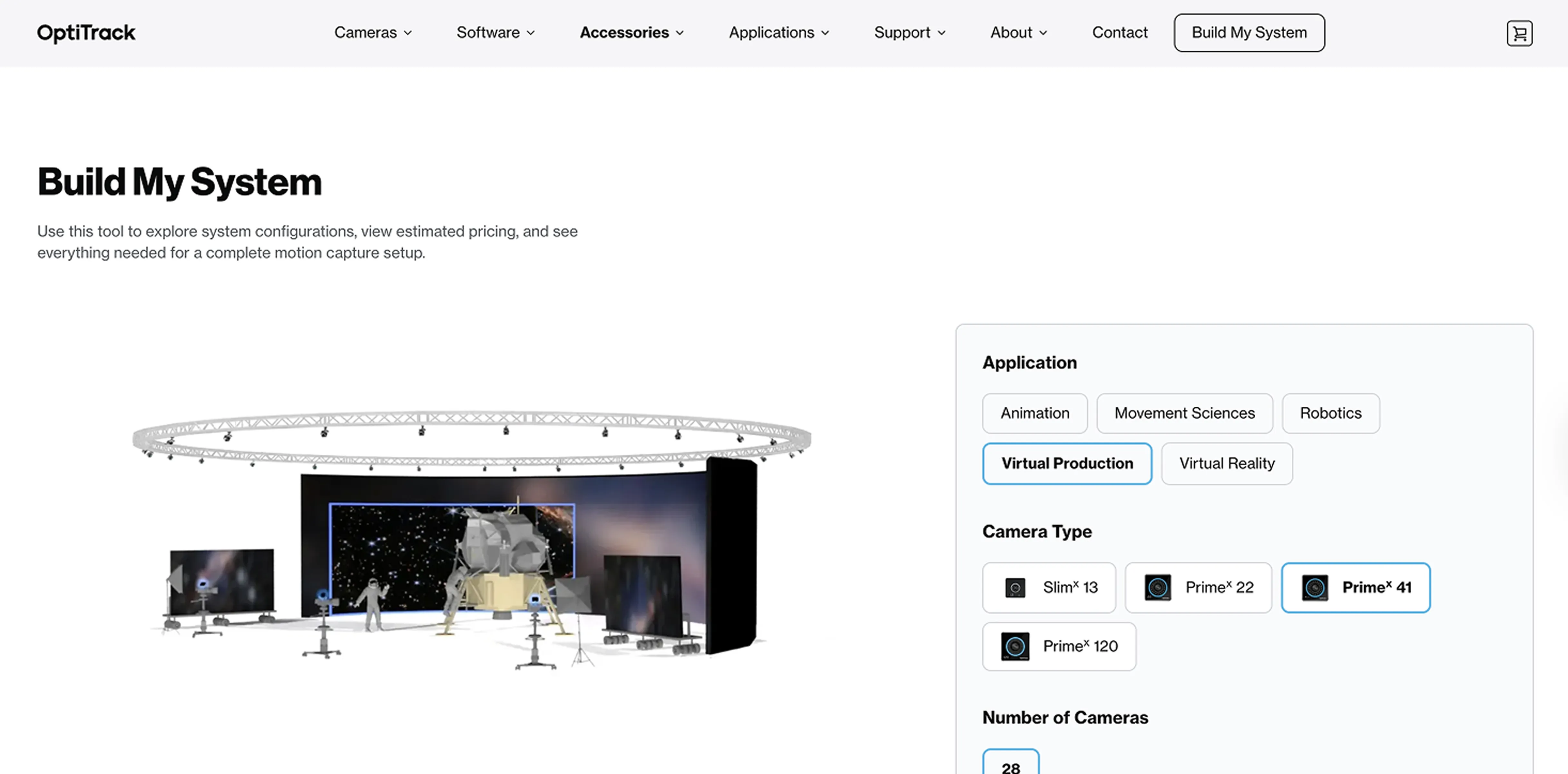
So we shipped the product catalogue + variants + filtering + configuration flows + cart/checkout touchpoints as one coordinated release, with 6 other systems integrated behind the scenes.
Old + new ran side-by-side
We ran the old and new sites in parallel and moved traffic over gradually. Routing handled the split, and sync kept the business logic consistent.
Payload owned content and the admin operating model
Commerce tools handled pricing, variants, and cart behaviour
Enterprise systems, ERP and CRM systems were still the source of truth after checkout.
This created predictable progress and eliminated “launch day anxiety”.
Release workflow
Phased rollouts require stronger release safety than a typical rebuild. Payload Cloud provided the foundation, and the team designed a multi-environment workflow around it:
Standard dev + staging + production environments
Deliberately “breakable” environment for rapid iteration
Dedicated “pre-release” environment for visual regression testing, pairing:
staging code
production data
This caught UI regressions early, especially valuable when timelines compressed QA windows.